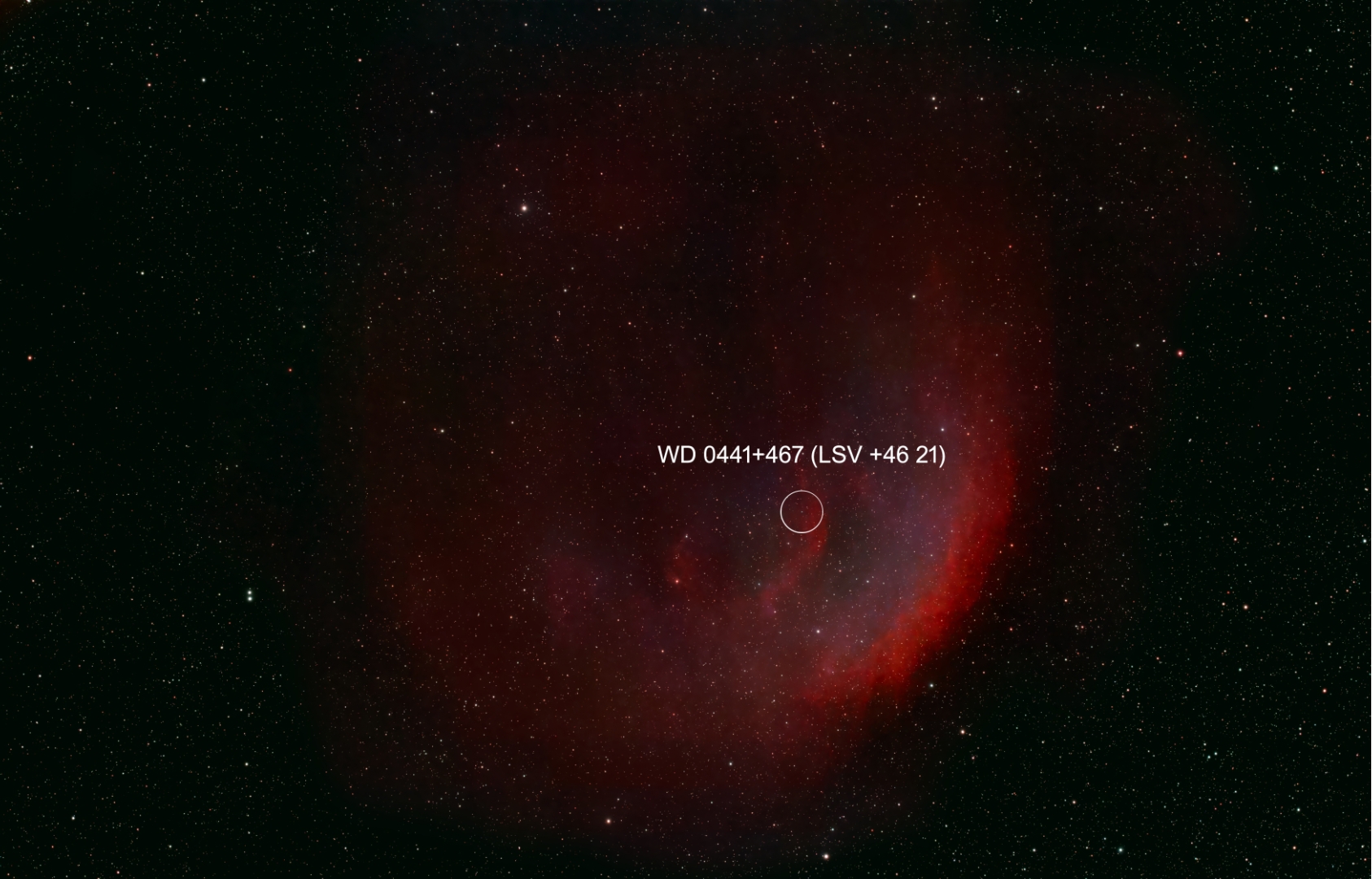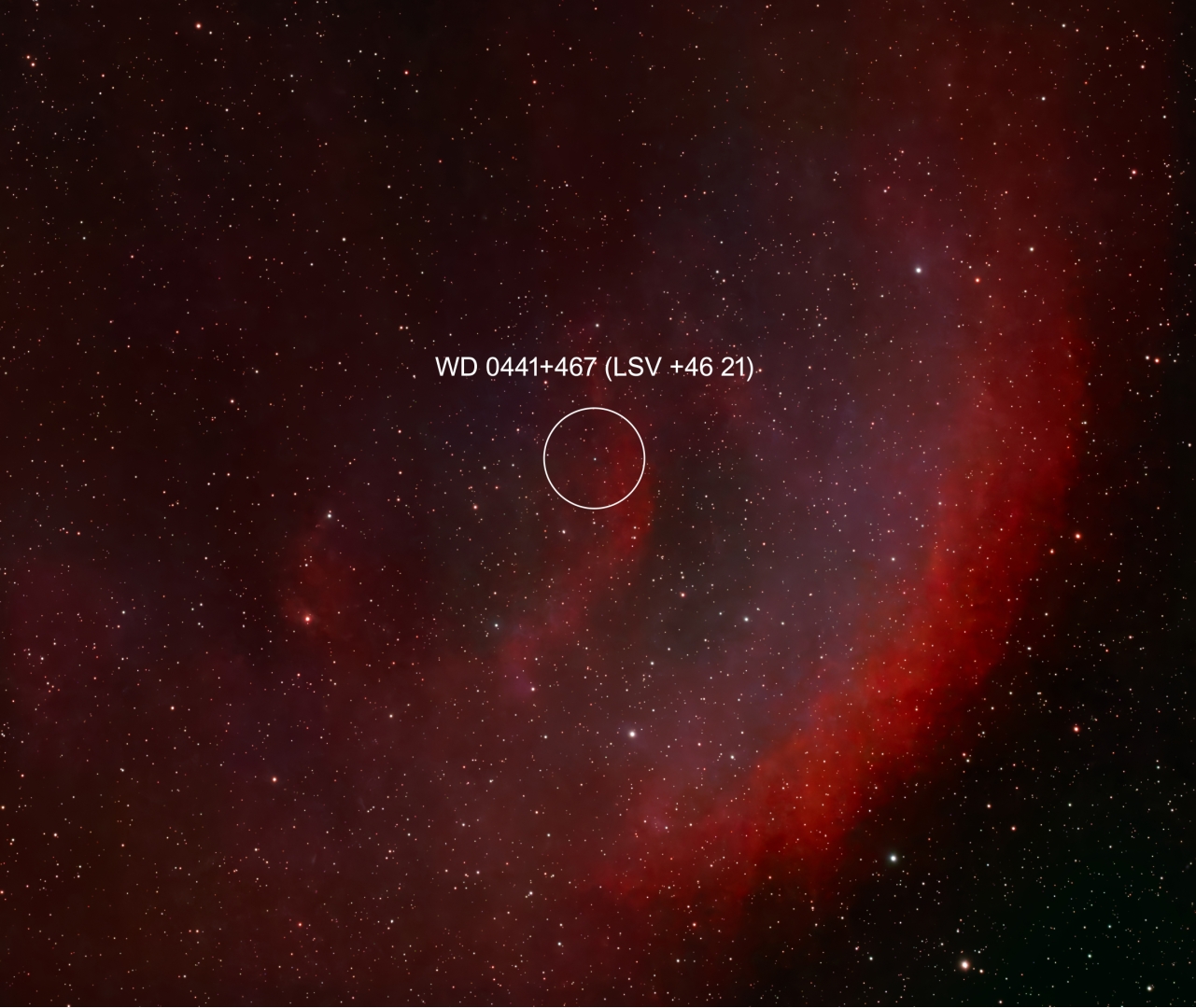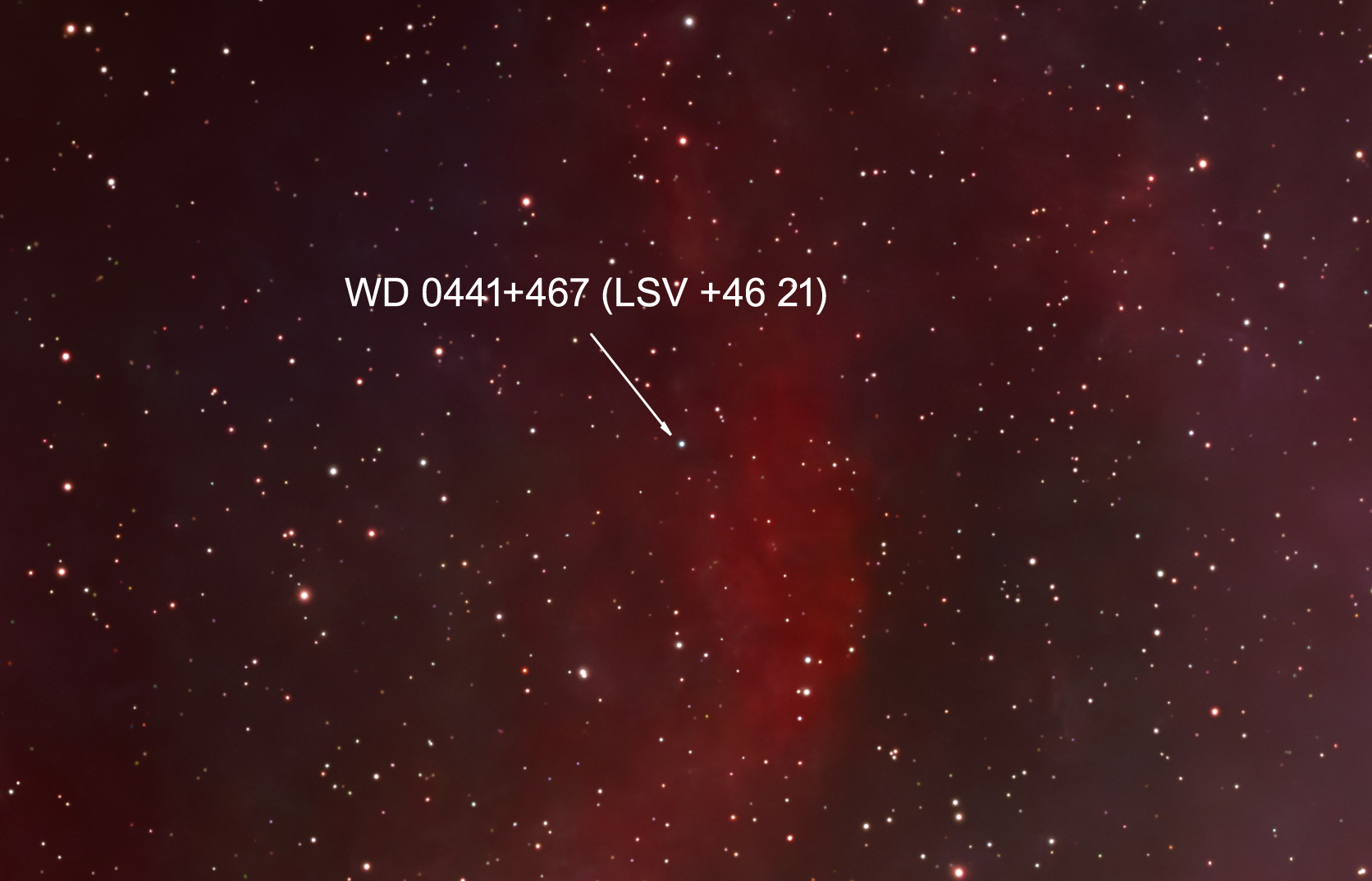
LSV 46°21: The Central White Dwarf Star of Sh 2-
The central star of Sh 2-
Section 2 is wort a read as it presents a nice overview of the analysis techniques and typical compositions of small, hot central stars. White dwarfs are fascinating objects with very complex elemental and molecular compositions. Fig. 4 of the paper, for instance, is a plot of the relative abundance of elements in LSV 46°21’s photosphere. The graph is in two parts, but the upper part plots abundance versus mass fraction. You can see the high abundance of heavy metals relative to the solar abundance values, obviously indicating significant dredge up.
https://arxiv.org/pdf/0709.0041
White Dwarfs:
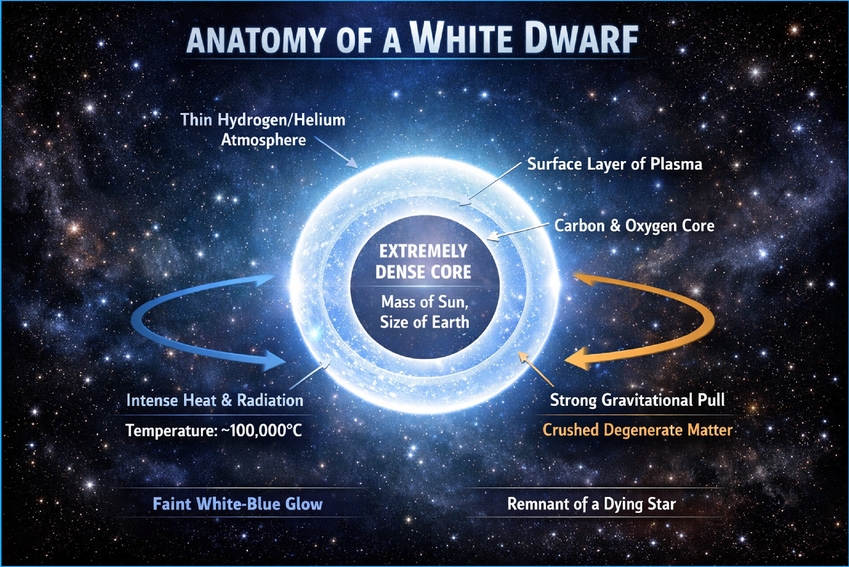
A white dwarf is the compact stellar remnant produced by the evolution of low-
Formation and Evolution
During the main-
Physical Properties
White dwarfs are characterized by:
- High density: Masses comparable to that of the Sun are confined within a radius similar to that of Earth, yielding average densities on the order of 106 to 107 g/cm3
- Degenerate matter: Their internal structure is supported by quantum mechanical degeneracy pressure rather than thermal pressure.
- Composition: Most consist primarily of carbon and oxygen, though helium or oxygen–neon cores are possible depending on progenitor mass.
- High initial temperature: Newly formed white dwarfs can have surface temperatures exceeding 100,000 K.
- Absence of fusion: They radiate residual thermal energy and gradually cool over billions of years.
White dwarfs obey an inverse mass–radius relation: more massive white dwarfs have smaller radii. Their maximum stable mass is limited by the Chandrasekhar limit (approximately 1.4 solar masses), beyond which electron degeneracy pressure can no longer counteract gravitational collapse.
Solar Evolution
Stellar evolution models predict that the Sun will evolve into a red giant in approximately 5 billion years and ultimately leave behind a carbon–oxygen white dwarf.
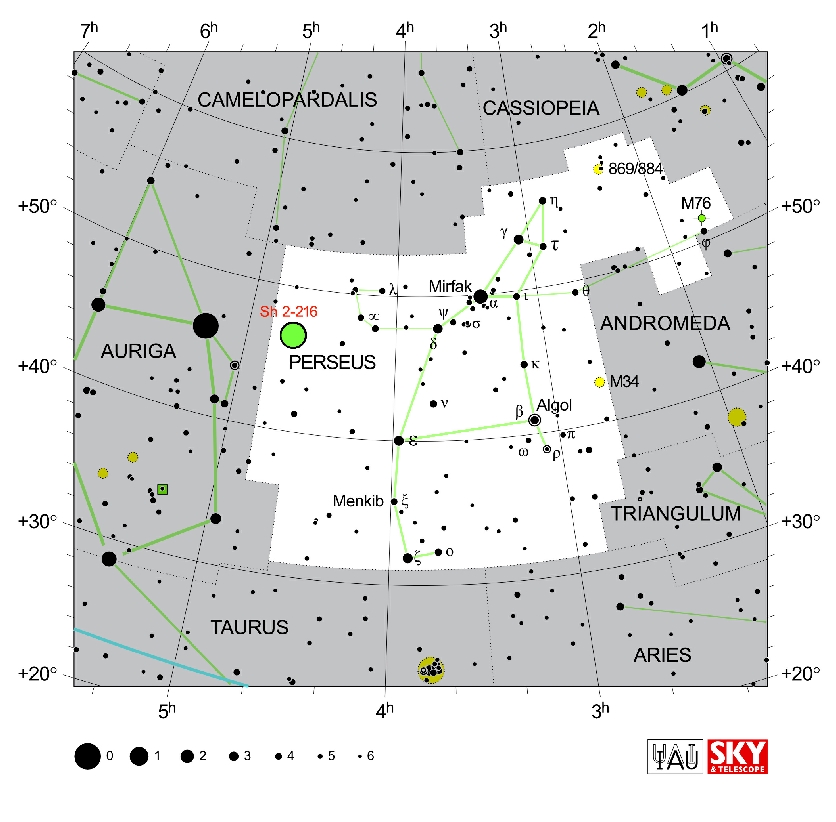
Location of Sh 2-
Location of Sh 2-