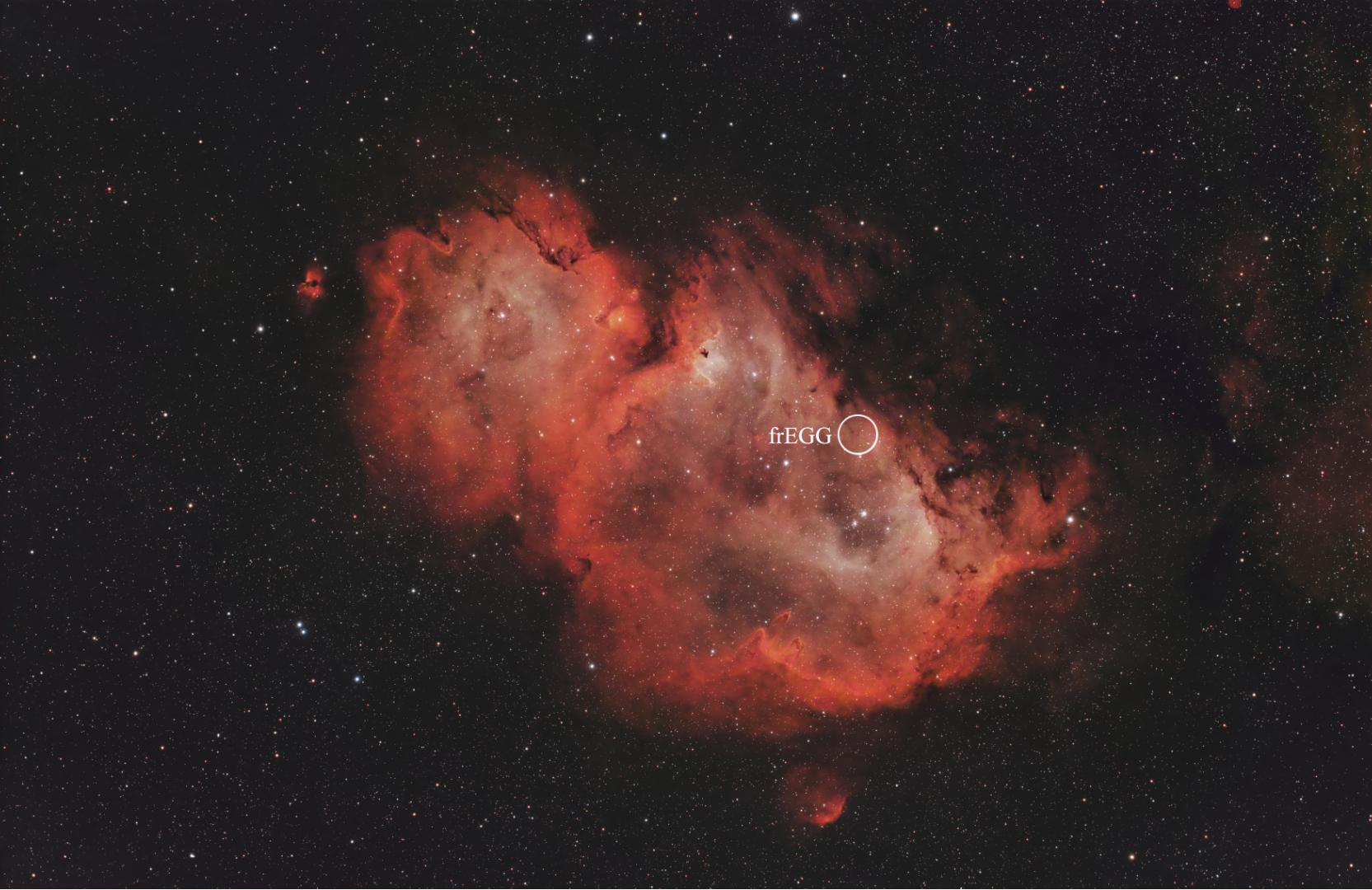
Star Formation in Westerhout W5 (Soul Nebula)
Star formation and star formation mechanisms, RDI theory in particular, have always
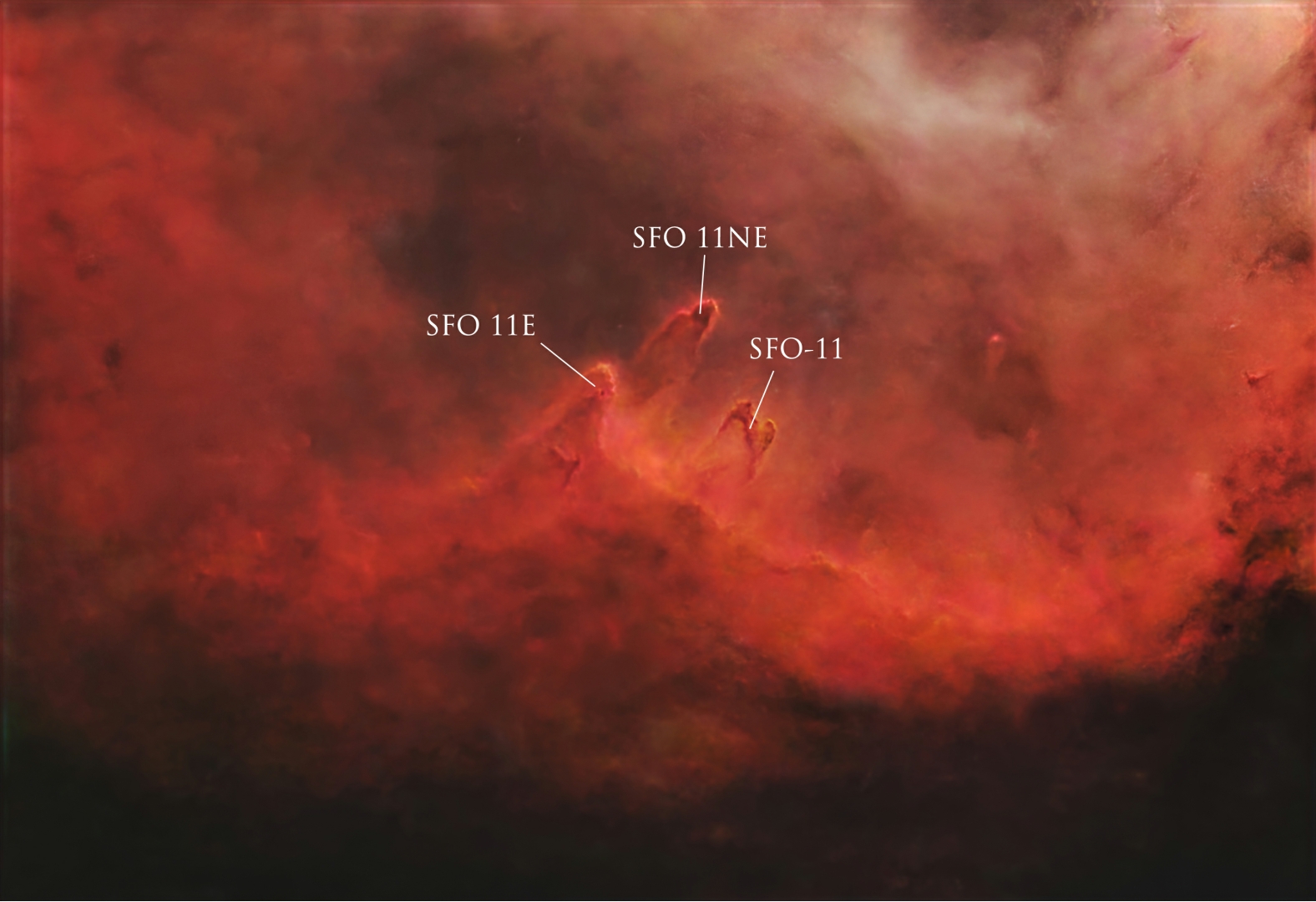
interested me. IC 1848/ Westerhout 5 or the Soul Nebula (IC 1848 is the designation
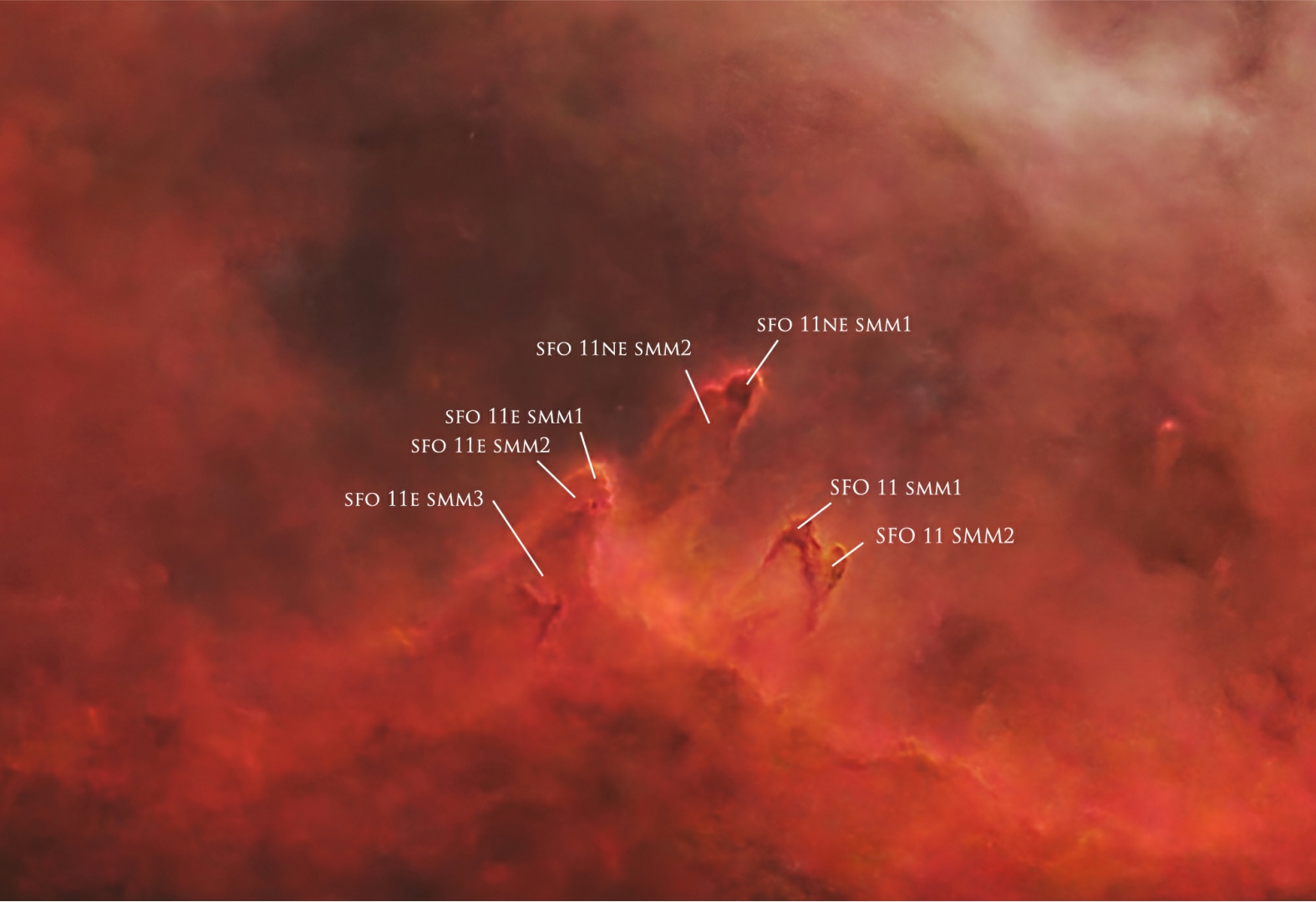
of the open cluster and not the nebula) contains many star forming areas but SFO
11 (Sugitani, Fukui and Ogura 11) and the adjacent cometary globules (often referred
to as Bright-
I've included a link to an paper by Thompson, White, Morgan, Miao, Fridlund, Huldtgren-
I think it's worth nothing that since this paper was first published in 2004, there
have been at least 7 other papers detailing the same mechanisms at work in other
star forming galactic nebula, including the Great Orion Nebula. SFO 11 NE SMM1 has
been the subject of much recent study relating to motions associated with its core,
which indicate a collapsing core surrounded by an expanding outer envelope, typical
of re-
https://www.aanda.org/articles/aa/pdf/2004/06/aah4521.pdf
If you're interested in understanding a little more about photoevaporation flow,
the process by which gas clouds are excited by UV and X-
https://iopscience.iop.org/article/10.1086/430593/pdf
Or Radiation-
https://articles.adsabs.harvard.edu/pdf/2011IAUS..270..263B
"A radiation driven implosion model for the enhanced luminosity of protostars near HII regions" by Motoyama, Umemoto and Shang, 2007
https://arxiv.org/pdf/astro-
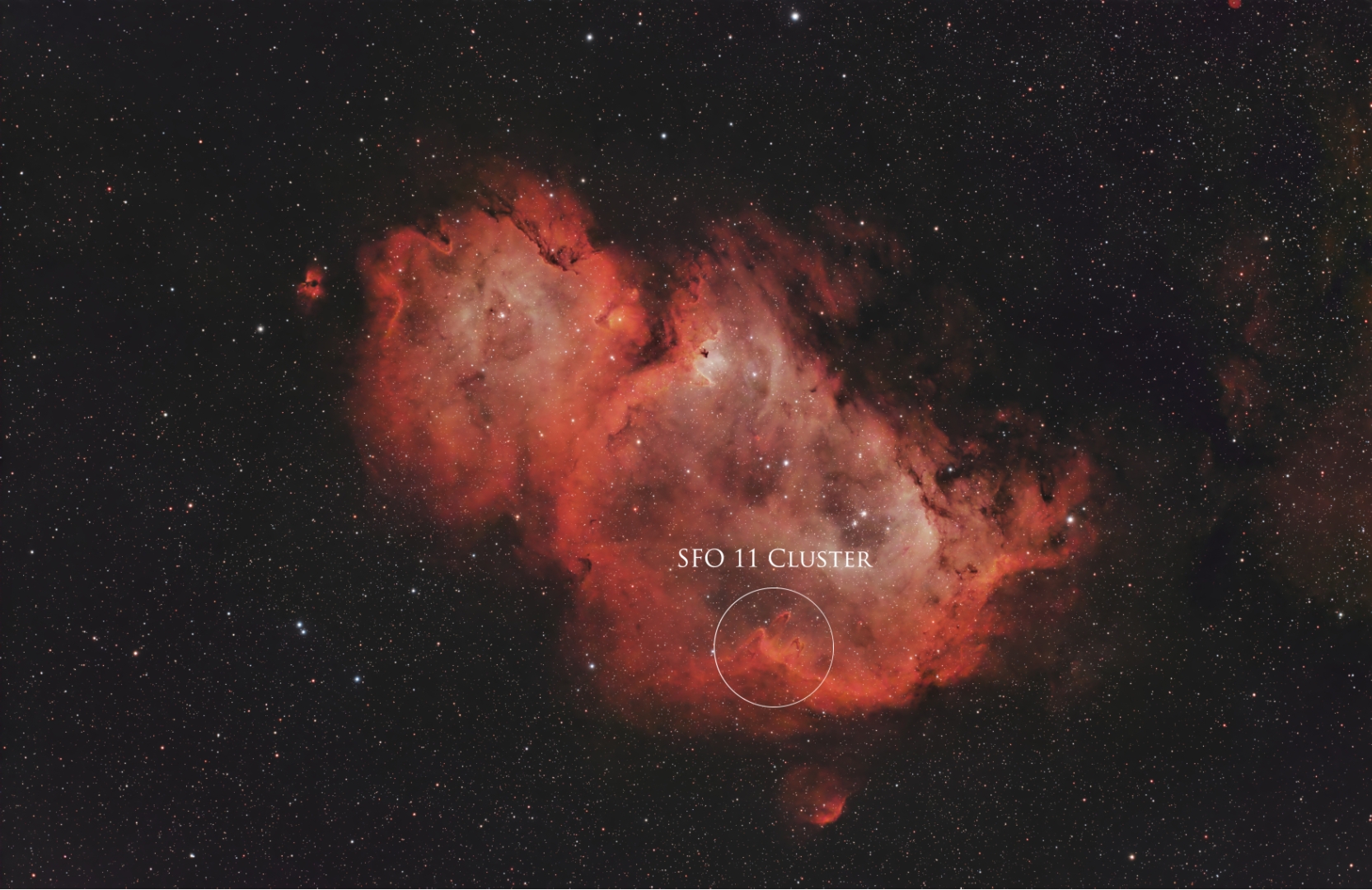
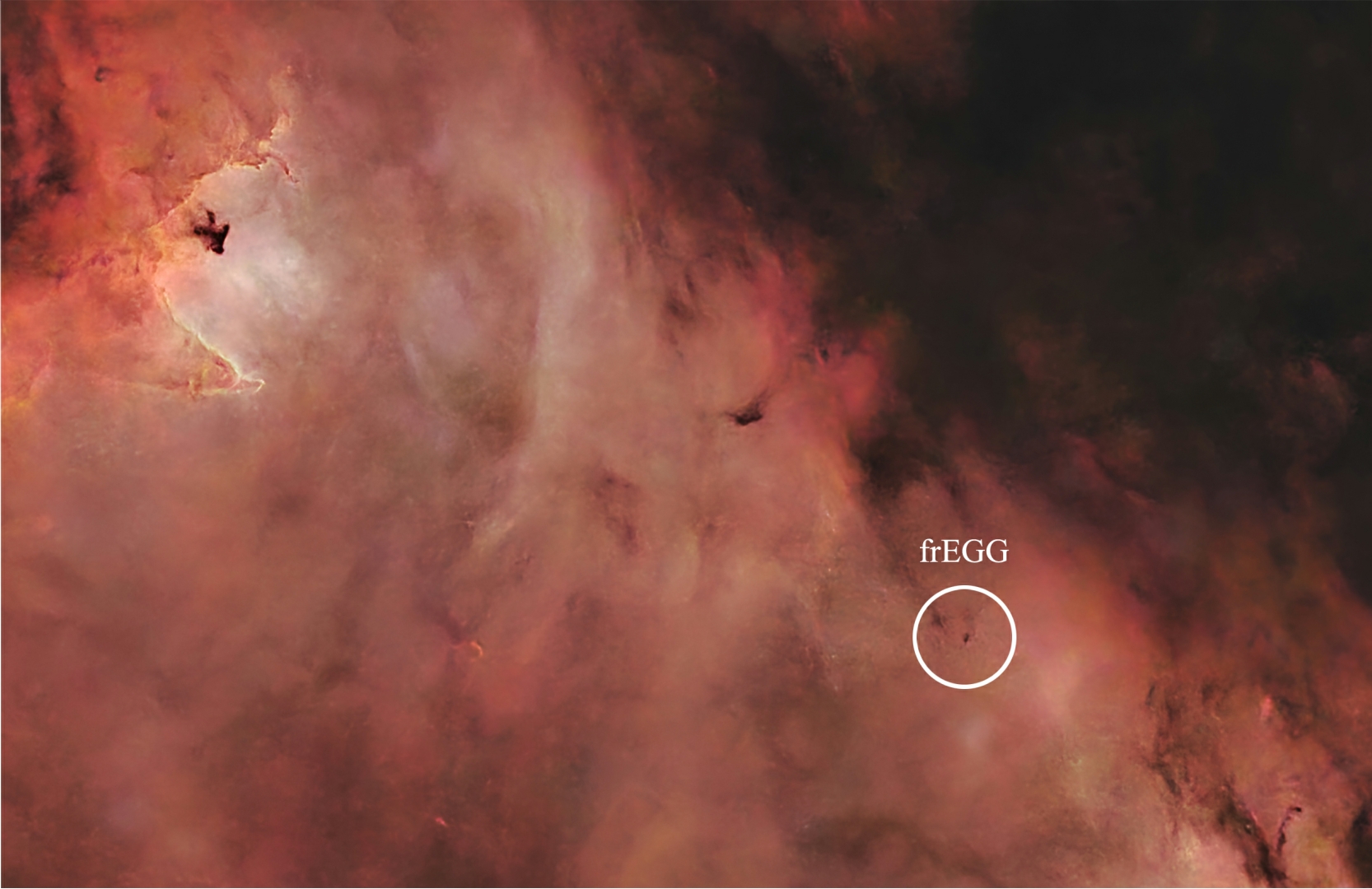
Evaporating Gas Globules (EGG).
Apart from the more obvious cometary globules, there are a number of other star forming
processes going on within the Soul Nebula. The results of a survey undertaken by
NASA using the HST, to locate Evaporating Gaseous Globules (EGGs) and Free-
https://ui.adsabs.harvard.edu/abs/2017adap.prop..202S/abstract
Ultimately, all star formation is driven by gravity. Gravity is not a force, gravity
is an effect, resulting from the interaction of mass and space-
There are many mechanisms involved, from basic matter distribution, photoevaporative flow, Triggered or Radiation Driven Implosion (RDI), though Triggered formation includes many mechanisms, EGGs/ frEGGs etc. There are two papers that I'd like to point out. The first, by Kuruwita, Tychoniecb and Federrathc, 2024, is an examination of the nature of the forces that create stellar masses capable of start generation:
https://arxiv.org/pdf/2409.03371
The second paper, by Deepnil Ray, 2025, deals more with the terminal mechanisms of star formation.
https://papers.ssrn.com/sol3/papers.cfm?abstract_id=5169077.